Houston, Texas · 2 November 2025On November 2, 2025, NASA and its international partners marked 25 years of continuous human presence aboard the International Space Station (ISS). Since the arrival of the Expedition 1 crew on that date in 2000, there has not been a single day when the station was unoccupied — an unbroken streak that stands as one of the most enduring achievements in the history of human spaceflight.
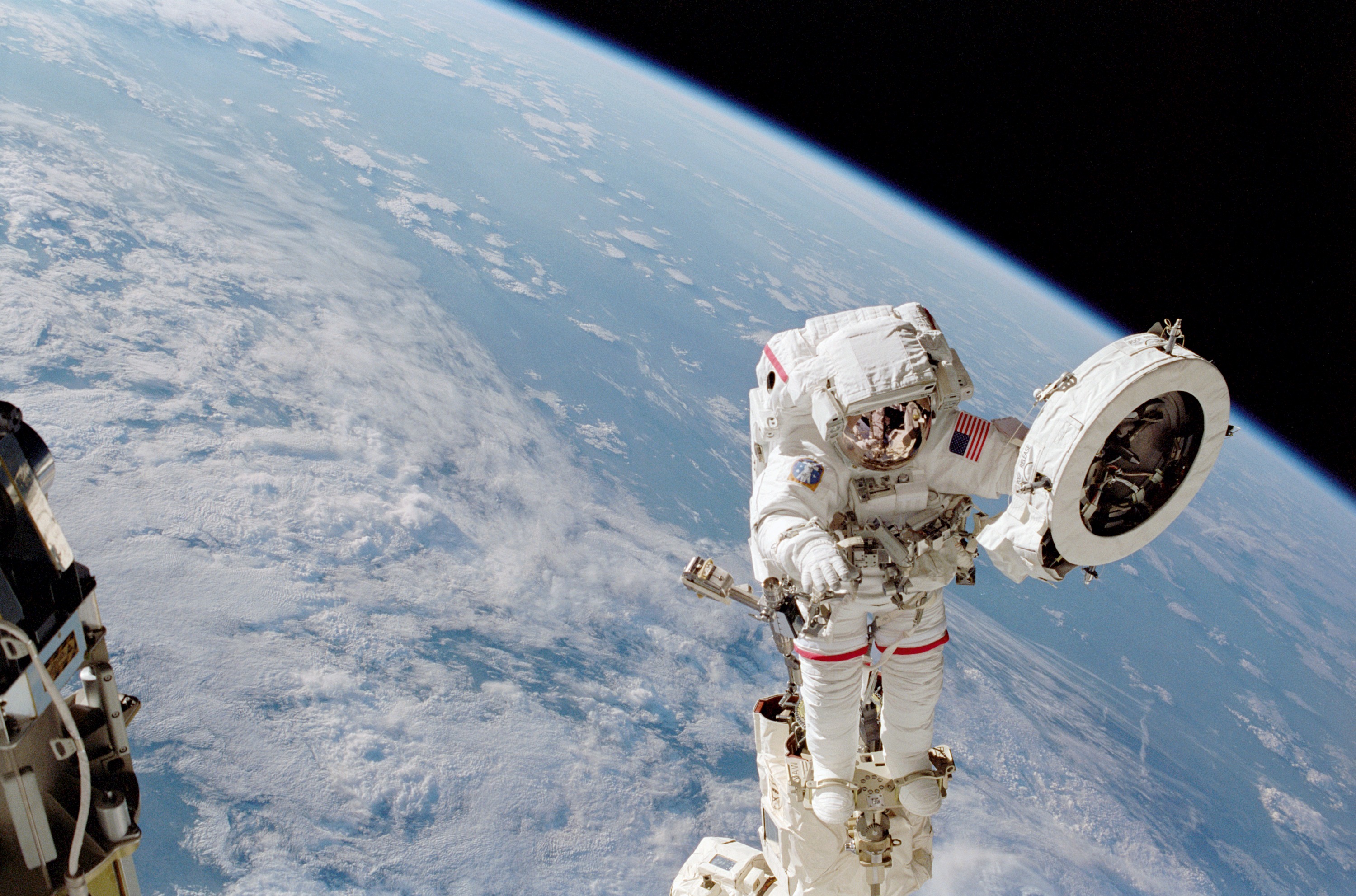
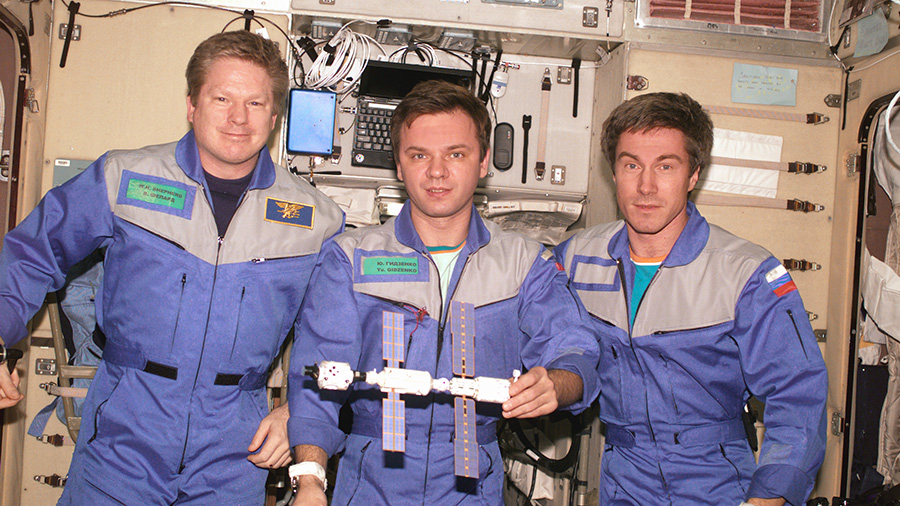
An astronaut works outside the International Space Station during a spacewalk. Over 270 spacewalks have been dedicated to station assembly and maintenance across 25 years of continuous occupation. Credit: NASA## The First Expedition: A Fragile BeginningThe legacy began with the arrival of the Expedition 1 crew — NASA astronaut William M. Shepherd as commander, and Russian Aviation and Space Agency (now Roscosmos) cosmonauts Yuri P. Gidzenko and Sergei K. Krikalev — who launched from the Baikonur Cosmodrome in Kazakhstan on October 31, 2000. After a successful docking two days later, the crew transferred aboard the station and began bringing it to life.
The Expedition 1 crew in the Zvezda Service Module aboard the International Space Station. From left: Commander William Shepherd, Soyuz Commander Yuri Gidzenko, and Flight Engineer Sergei Krikalev. Credit: NASATheir primary tasks during the four-month mission included installing and activating life support and communications systems and working with three visiting space shuttle crews to continue the station's assembly. What began as what NASA described as "a fragile framework of modules" has evolved over 25 years into a fully realized research facility spanning the size of a football field.> [!STAT] Over the course of 25 years of continuous occupation, more than 290 individuals from 26 countries have lived and worked aboard the ISS. More than 270 spacewalks have been dedicated to station assembly and maintenance.## A Global EndeavourThe ISS is one of the most ambitious international collaborations ever attempted. Five partner space agencies operate the orbiting laboratory:| Partner Agency | Country/Region ||---|---||
NASA | United States ||
Roscosmos | Russia ||
ESA | Europe ||
JAXA | Japan ||
CSA | Canada |Each partner takes primary responsibility for managing and running the station hardware it provides, as well as the ground-based construction, launch support, mission operations, communications, and research facilities that support the station. The partnership has survived geopolitical tensions — including periods of significant strain between the United States and Russia — and continues to serve as a model for international cooperation in space.## A Quarter Century of Scientific DiscoveryThe ISS has served as a unique microgravity laboratory, hosting thousands of experiments that have advanced biotechnology, medicine, physics, and materials science. Research conducted aboard the station has ranged from studying the effects of microgravity on the human body to growing protein crystals, testing new materials, and examining how plants grow in space.In January 2025, for example, crew members collected samples for an investigation examining whether microorganisms have exited through station vents and can survive in space — research that informs spacecraft design to help prevent human contamination of Mars and other destinations.The station has also functioned as a crucial proving ground for technologies — life support, navigation, radiation shielding — that are intended to support future human exploration missions to the Moon and Mars.> [!INSIGHT] The ISS is not merely a laboratory; it is a testbed for the technologies and operational practices that will underpin humanity's next steps beyond low Earth orbit. Every system aboard — from water recycling to radiation monitoring — provides data that directly informs the design of lunar and Martian habitats.## Milestones in Spacewalk HistoryAssembly and maintenance of the station would not have been possible without the skilled work of crew members performing spacewalks — what NASA calls Extravehicular Activities (EVAs). Several made station and human spaceflight history:-
May 1999: NASA astronaut Tamara Jernigan became the first woman to complete a spacewalk at the space station.-
March 10, 2001: NASA astronauts James Voss and Susan Helms set the record for longest spacewalk in U.S. history at 8 hours and 56 minutes.-
October 18, 2019: The first all-female spacewalk in history, conducted by NASA astronauts Christina Koch and Jessica Meir.-
February 26, 2004: The first spacewalk conducted with no one inside the station, by NASA astronaut Mike Foale and Russian cosmonaut Aleksandr Kaleri.## Commercial Crew and the Low Earth Orbit EconomyThe station welcomed its first commercial crew members on May 31, 2020, when NASA astronauts Robert Behnken and Douglas Hurley arrived aboard SpaceX's Crew Dragon Demo-2 test flight — the first launch of American astronauts from U.S. soil since the space shuttle's retirement in 2011. This mission paved the way for regular commercial crew flights, expanding research capacity and increasing opportunities for discovery.Private astronaut missions have since contributed to scientific, outreach, and commercial activities aboard the station, helping demonstrate demand for future commercial space stations and forming an important component of NASA's strategy for enabling a robust commercial economy in low Earth orbit.## Looking Ahead: From ISS to ArtemisAs the ISS program looks toward its eventual retirement, the lessons learned from 25 years of continuous human presence are directly informing NASA's Artemis campaign to return humans to the Moon and eventually send them to Mars. Long-duration missions aboard the station — such as NASA astronaut Frank Rubio's record-setting 371-day single spaceflight — have provided scientists with unprecedented data on how the human body adapts to extended periods in microgravity, knowledge essential for planning deep space journeys.> [!NOTICE] The ISS program is scheduled to operate through at least 2030, after which NASA plans to transition to commercially operated low Earth orbit destinations. The scientific and operational legacy of 25 years of continuous habitation will serve as the foundation for this next chapter.## Sources- NASA, "The International Space Station Marks 25 Years of Continuous Human Presence," nasa.gov, December 2, 2025- NASA, "International Space Station: 25 Years," nasa.gov/international-space-station/iss25/- ISS National Lab, "International Space Station Marks 25 Years of Continuous Human Presence: A Legacy of Global Collaboration and Innovation," issnationallab.org- National Space Society, "25 Years of Humans Off Earth," nss.org- Associated Press, "The International Space Station Marks 25 Years of Nonstop Human Presence in Orbit," ap.org, 2025