
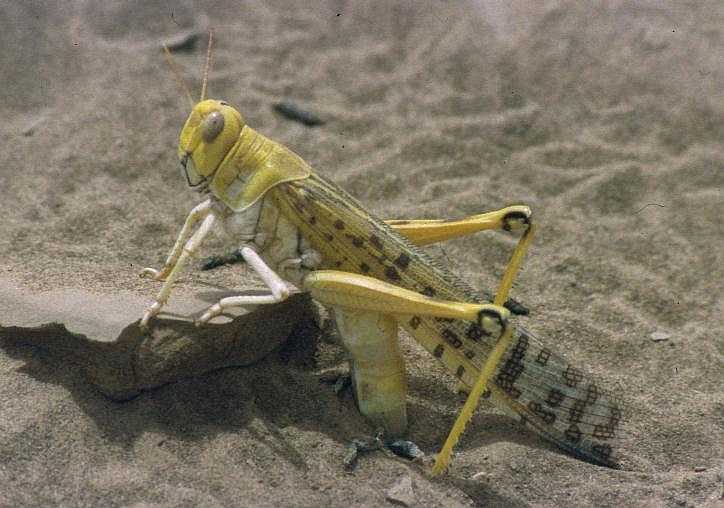
Nairobi, Kenya · 20 December 2019 — By late 2019, vast swarms of desert locusts (Schistocerca gregaria) had descended upon the Greater Horn of Africa in what the Food and Agriculture Organization (FAO) described as the worst upsurge to hit the region in 25 years — and the most serious infestation to strike Kenya in 70 years. Triggered by an unusual sequence of cyclones in 2018 that created ideal breeding conditions in the Arabian Peninsula, the locusts spread rapidly across Ethiopia, Somalia, Kenya, and neighbouring countries, devouring crops and pasturelands at a devastating rate. The FAO mobilised an emergency response, but the scale and speed of the upsurge overwhelmed the capacity of national control programmes, raising the spectre of widespread crop losses and food insecurity across a region already vulnerable to climate shocks.
The Origins of the Upsurge
The desert locust crisis that engulfed East Africa in late 2019 did not begin in Africa. Its origins lay in an extraordinary sequence of weather events in the Arabian Peninsula in 2018.
In May and October 2018, two rare cyclones — Luban and Mekunu — made landfall in the southern Arabian Peninsula, bringing heavy rainfall to areas that are normally among the driest on Earth. The Empty Quarter (Rub' al Khali), a vast sand desert spanning parts of Saudi Arabia, Yemen, Oman, and the UAE, received unprecedented rainfall, creating temporary lakes in desert depressions and producing lush vegetation across vast areas of normally barren sand.
These conditions were ideal for desert locust breeding. The locusts, which had been present in the area in low-density "recession" populations, responded to the abundant vegetation and moisture by multiplying rapidly. Over several generations — each taking about two to three months — the populations grew exponentially. By early 2019, swarms had formed and begun to migrate, moving southward into Yemen and then, carried by prevailing winds, across the Red Sea and the Gulf of Aden into the Horn of Africa.
The Spread Across East Africa
By mid-2019, swarms were established in the highlands of Ethiopia and the coastal areas of Somalia. The locusts benefited from another unusual weather event: the positive Indian Ocean Dipole (IOD) of 2019, which brought above-average rainfall to East Africa from October to December. This rainfall promoted further breeding and vegetation growth, providing the locusts with both food and egg-laying conditions across a wide area.
In December 2019, the situation escalated dramatically. Swarms moved south from Ethiopia and Somalia into Kenya, arriving in unprecedented numbers. The FAO reported that some individual swarms in Kenya covered areas of up to 40 by 60 kilometres — among the largest observed in decades. The swarms also spread westward, reaching eastern Uganda, South Sudan, and northern Tanzania.
Kenya had not experienced a locust infestation of this magnitude since 1944. The country's locust control infrastructure, which had been largely dormant for decades, was ill-equipped to respond to an upsurge of this scale. Ethiopia and Somalia, while more familiar with locust activity, were also overwhelmed by the number and size of the swarms.
| Country | Status (Late 2019) |
|---|---|
| Ethiopia | Swarms established in highlands; breeding underway |
| Somalia | Widespread swarms in northern and central regions |
| Kenya | First major infestation in 70 years; swarms in north and central |
| Uganda | Swarms reported in eastern border areas |
| South Sudan | Locusts detected in southeastern regions |
| Tanzania | Swarms approaching northern border |
The Threat to Food Security
The desert locust upsurge struck a region already under severe food security stress. The Greater Horn of Africa had experienced recurrent droughts and floods in recent years, and several countries were dealing with internal displacement and conflict. The locusts threatened to compound these existing vulnerabilities.
A desert locust swarm can consume in one day the amount of food that could feed tens of thousands of people. In a region where agriculture is the primary livelihood for the majority of the rural population, the loss of crops and pasture to locusts has immediate and cascading consequences: reduced food availability, higher food prices, loss of income for farming households, depletion of livestock forage, and increased dependence on food aid.
The FAO estimated that the locust upsurge could potentially affect the food security of over 20 million people in the Horn of Africa — a population already facing acute food insecurity due to drought, conflict, and economic stress. In Ethiopia, where the upsurge began, locusts had already damaged tens of thousands of hectares of cropland and pasture by the end of 2019. In Somalia, the swarms threatened the sorghum and maize harvest in the southern breadbasket regions. In Kenya, the pastoralist communities of the northern counties faced the loss of grazing land at the height of the dry season.
The FAO Response
The FAO served as the primary international body coordinating the response to the desert locust upsurge, leveraging its Desert Locust Information Service (DLIS), which provides early warnings based on satellite imagery, weather data, and national monitoring reports.
The response was structured around three key pillars:
1. Surveillance and Curbing Spread
The FAO supported ground and aerial surveillance operations to track swarm movements and identify breeding sites. This information was critical for targeting control operations — primarily aerial spraying of insecticides — before swarms could mature and lay eggs. The FAO provided pesticides, spray equipment, and training to national locust control teams.
2. Safeguarding Livelihoods and Promoting Recovery
Recognising that even successful control operations would not prevent all crop losses, the FAO worked to protect the livelihoods of affected rural households. This included providing emergency agricultural inputs (seeds, tools, fertiliser) to enable replanting, supporting livestock feed programmes, and offering cash transfers to the most vulnerable households.
3. Coordination and Preparedness
The FAO mobilised international donor funding to support the response. By the time the upsurge was fully suppressed in 2022, the FAO had mobilised more than USD 230 million from international donors. The agency also coordinated with national governments, regional organisations (including the Desert Locust Control Organisation for Eastern Africa, DLCO-EA), and humanitarian partners to ensure a coherent response.
The Climate Connection
The 2019 locust upsurge was a stark illustration of how climate extremes can trigger cascading ecological and food security crises. The cyclones that seeded the upsurge in the Arabian Peninsula were themselves linked to broader patterns of climate variability, including warming sea surface temperatures in the Indian Ocean.
Climate scientists noted that the frequency of tropical cyclones in the Arabian Sea had increased in recent decades, a trend consistent with climate model projections of warming Indian Ocean waters. The positive Indian Ocean Dipole event of 2019, which amplified rainfall across East Africa and facilitated locust breeding, was one of the strongest on record.
This climate dimension had troubling implications for the future. If the frequency and intensity of extreme weather events in the Arabian Peninsula and the Horn of Africa continue to increase, the conditions that trigger desert locust upsurges may become more common. The FAO's Desert Locust Information Service, which has been operating since the 1970s, may face challenges that exceed the historical baseline against which its forecasts are calibrated.
Looking Ahead
As 2019 drew to a close, the locust situation in the Horn of Africa was deteriorating rather than improving. The FAO warned that without sustained control operations, the upsurge could escalate into a full-scale plague in 2020. The concern was that the new generation of locusts, hatching from eggs laid during the October–December rainy season, would mature and form new swarms in early 2020 — coinciding with the start of the main planting season.
This warning proved prescient. In early 2020, a second wave of swarms, larger and more widespread than the first, swept across the region. The crisis continued through 2020 and into 2021, with control operations eventually treating over 2.3 million hectares across the Horn of Africa and Yemen. The FAO later estimated that these efforts averted approximately 4.5 million metric tonnes of crop losses, saving food for nearly 42 million people, with an economic value of approximately USD 1.77 billion.
The desert locust upsurge that began in 2018 and engulfed East Africa in 2019 became one of the most significant transboundary pest crises of the 21st century. It tested the limits of international cooperation, national capacity, and the global early warning system — and it demonstrated, with painful clarity, the speed at which climate-driven ecological shocks can translate into food security emergencies for some of the world's most vulnerable populations.
Sources:
- FAO, Desert Locust Information Service (DLIS) updates (2019–2020)
- FAO, Desert Locust Crisis: Response and Impact (2022)
- ICPAC (IGAD Climate Prediction and Applications Centre), Desert Locust outbreak reports (2019–2020)
- ReliefWeb, Real-Time Evaluation of FAO's Response to the Desert Locust Upsurge 2020–2021 (2022)
- Interconnected Risks, Desert Locust Outbreak: Technical Report (September 2021)
FIRAT Editorial Board
Institutional Research Desk · Foresight Institute of Research and Translation
The collective editorial and research translation board of FIRAT, synthesising peer-reviewed evidence, policy briefs, and division milestones across our seven foundational research pillars.

